

Anyone sourcing materials for an industrial or engineering project has run into these three numbers before: 301, 304, 316. They can look like arbitrary product codes at first glance, but each grade is actually a different alloy composition, and that composition determines how the material performs in the field, how long it lasts, and how well it holds up in its environment.
Whether you’re ordering stainless steel coil for a manufacturing line, stainless steel beams for a load-bearing structure, or stainless steel angles for installation and reinforcement work, the grade you settle on has more impact on the final result than the purchase price does. Get it wrong, and the savings on day one turn into maintenance costs down the line.
Here’s a practical breakdown of where each grade fits, and how to decide between them.
How Stainless Steel Performance Differs From One Grade to Another
Stainless steel starts as an alloy of iron and chromium, with elements like nickel, molybdenum, and manganese added in varying proportions depending on the grade. That’s the whole story behind the performance differences: more chromium means better oxidation resistance, molybdenum is what gives a grade its edge against corrosion in salty or chemical-heavy environments, and grade 301’s composition leans toward mechanical strength rather than maximum corrosion resistance.
Put simply, choosing a grade isn’t a branding decision — it’s an engineering one, and it starts with understanding the environment the material will actually operate in.
Stainless Steel 301: Priority on Strength and Formability
This grade suits parts that face constant pressure or stress while still needing to be bent or shaped easily. That’s why it shows up in certain automotive components, springs, and machined metal parts, as well as in specific stainless steel beam applications where mechanical durability matters more than corrosion resistance.
Its rust resistance holds up fine under normal conditions, but it’s not the grade to reach for in environments saturated with salt or chemicals.
Stainless Steel 304: The Most Popular Grade
Stainless steel 304 leads the pack in project usage worldwide, and the reason comes down to one thing: it balances quality and cost better than any other grade. It resists corrosion reliably under normal conditions, welds and forms easily, and that combination makes it the go-to choice for kitchen equipment, water tanks, food production lines, and general industrial machinery.
Most manufacturers rely on stainless steel 304 coil for sheet and pipe production, while 304 angles are widely used in construction and metal framework for their durability and ease of fabrication. If your project isn’t exposed to constant humidity or chemicals, grade 304 will typically get the job done without paying for a higher spec you don’t need.
When Do You Actually Need Stainless Steel 316?
In seawater, high sustained humidity, or repeated chemical exposure, grade 304 starts to fall short. That’s where 316 comes in; its higher molybdenum content is what gives it the extra corrosion resistance that 304 doesn’t have.
This is why 316 is the standard in pharmaceutical manufacturing, medical equipment, water desalination plants, chemical processing, and marine installations, where a long service life without environmental degradation matters more than upfront cost. It runs more expensive than 301 or 304, but it pays that difference back in fewer replacements and lower maintenance over the material’s lifetime.
How Do You Determine the Right Grade of Stainless Steel for Your Project?
- For a standard environment with no constant humidity or chemical exposure, stainless steel 304 covers most needs.
- For coastal locations or facilities working with chemicals, 316 costs more upfront but saves more over time.
- When mechanical strength and ease of forming are the priority, 301 is the better fit.
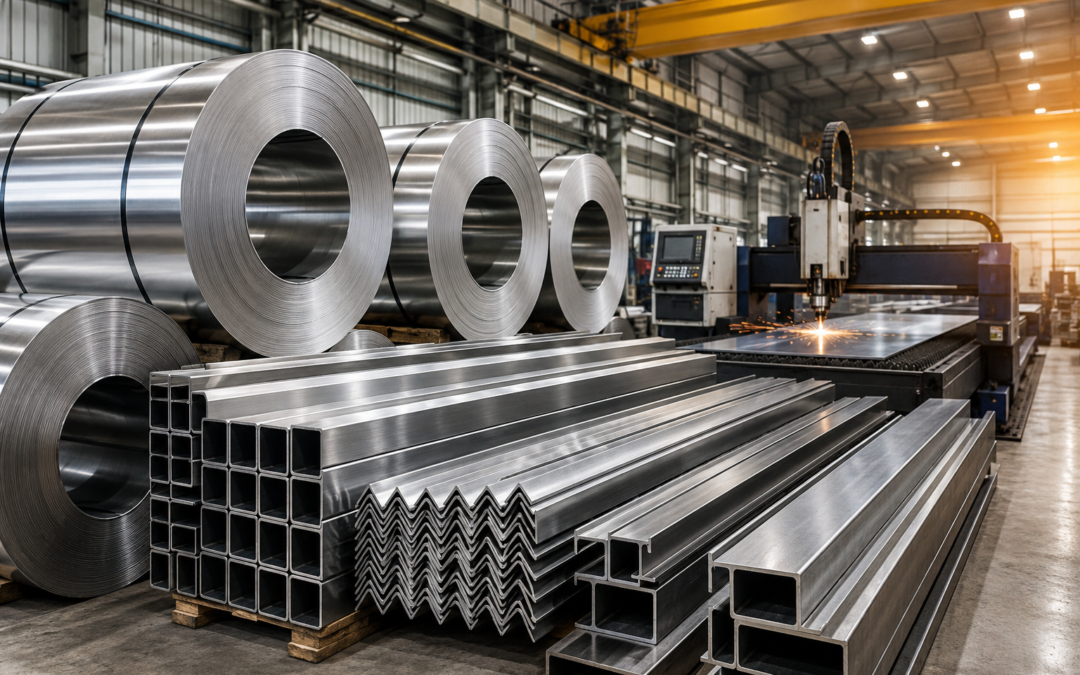
Stainless steel isn’t limited to flat sheet either; it comes in several forms depending on the application. Stainless steel coil goes into tanks, piping, and industrial equipment; stainless steel beams handle metal structures, production lines, and facilities that need high load-bearing capacity; and stainless steel angles are a staple in installation and reinforcement work across factories, industrial kitchens, and commercial facilities.
Pro Engineer: Your Trusted Partner for the Right Stainless Steel Choice
Even with the right grade selected, raw material quality is still what determines whether a project succeeds. Working with a supplier who has real experience in stainless steel supply and manufacturing, and who stocks material that meets recognized standards across a range of sizes and forms, is what keeps you from ending up with the wrong material or an unnecessary added cost. A good supplier doesn’t just sell; they help you match the grade to how you’ll actually use it.
That’s the role Pro Engineer plays as a stainless steel supplier and manufacturer in Egypt, offering an integrated range that includes stainless steel beams, coil, and angles, along with sheets, pipes, and other profiles, across grades 301, 304, and 316 to cover projects of any scale.
Beyond supply, the company handles cutting, fabrication, and finishing to the sizes each project requires, helping clients get their work done efficiently, with quality built to last. Just contact us to have the best quality stainless steel.